
A Best two step prop firm is a funding model that has become very popular in the trading industry. It requires traders to go through two evaluation phases, passing both of them in order to receive a funded account. These phases aim at testing consistency, discipline and risk management even under stress.
The biggest dilemma traders encounter here is whether to opt for swing trading vs day trading. Both techniques are feasible, however, each imparts different straits especially if you are trying to pass a structured prop firm challenge.
Knowing the impact of a strategy choice on performance is a must to make it a Best two step prop firm.
WHAT IS A BEST TWO STEP PROP FIRM
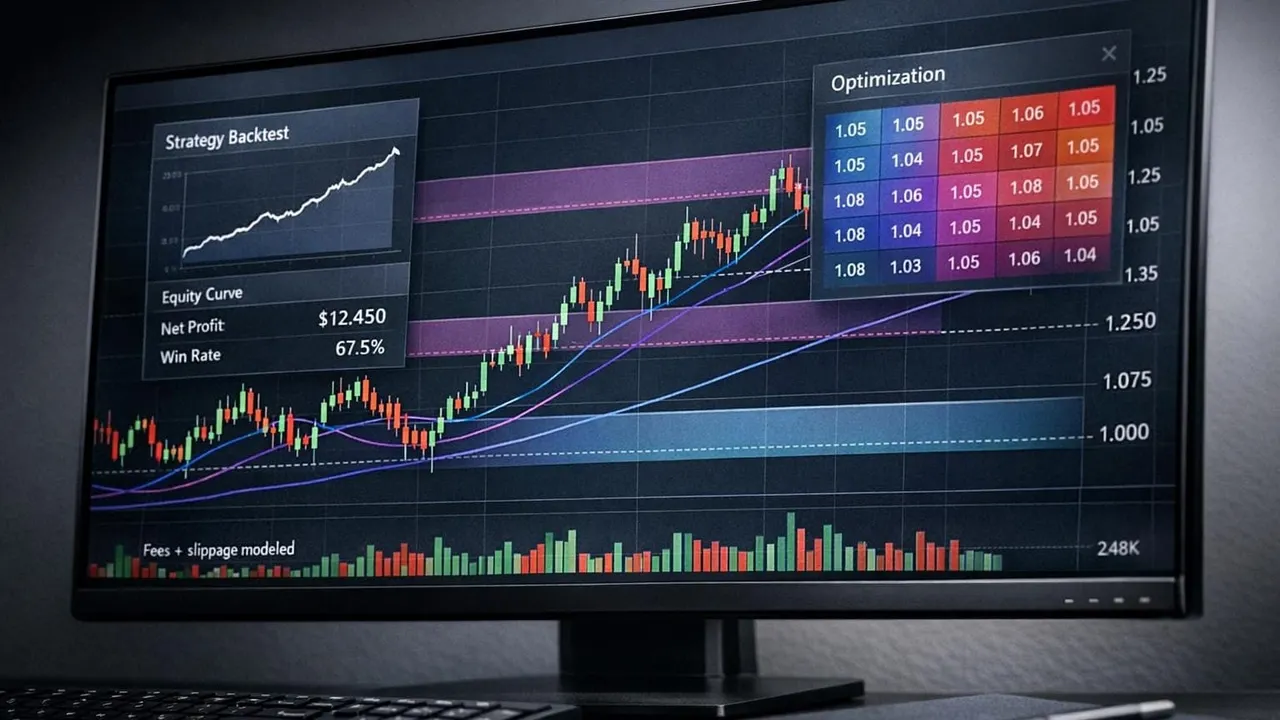
The evaluation system of a Best two step prop firm is structured and requires traders to complete two different stages. The first stage usually requires the trader to hit a profit target while risking minimum capital. The second stage tends to be less strict and usually is more about maintaining consistency.
Apart from profit, the traders are also judged based on how well they handle drawdowns, the size of their positions, and their emotional control.
This methodology aims at weeding out gamblers and discovering serious traders who know how to properly handle the capital.
UNDERSTANDING SWING TRADING VS DAY TRADING
Swing trading vs day trading are two vastly different concepts of trading.
Day trading is a style in which the trader buys and sells the same stock on the very same day. It demands fast decision-making, constant watching of the markets, and a considerable degree of mental toughness since the markets can move very quickly.
Swing trading means holding a position for a few days or even weeks. This type of trading is geared towards the use of long-term charts, being patient, and catching the swings of the market.
Either way, these approaches can fit a Best two step prop firm, but your choice will determine your risk exposure, the number of trades you make, and how much emotional stress you can take.
HOW DAY TRADING PERFORMS IN PROP FIRM EVALUATIONS
Due to the possibility of seizing multiple opportunities in a very short time, day trading is a favorite among prop firm traders.
In a Best two step prop firm, day trading is advantageous as it may quickly help traders to reach their profit quotas. On the flip side, it does come with an added stress factor, as more trades mean more chances to make emotional errors.
To be successful, day traders rely on strict adherence to risk management and must resist the temptation to trade excessively. The challenge is that when the orders are executed so swiftly, errors may be overlooked and thus pile up more quickly.
When done well, day trading yields rapid responses and results that evaluators can assess quickly.
HOW SWING TRADING PERFORMS IN PROP FIRM EVALUATIONS
When it comes to deciding between swing trading vs day trading, the former becomes more and more appealing in the context of prop firms.
Here, swing trading provides a way of trading which is emotionally less taxing since the trader does not have to fully focus on the charts throughout the day. Hence, it is a good way to keep one’s cool and not run into the problem of impulsiveness and overtrading.
On the other hand, it is to be expected that with swing trading one will have to be a little more patient as the development of the trades will take time. Comparing to day trading, achieving profits targets may require a longer waiting period.
However, a lot of traders who are very strict with their discipline prefer swing trading since they believe that it goes hand in hand with well-planned risk management.
RISK MANAGEMENT IN BOTH TRADING STYLES
Managing risk is undoubtedly the most critical aspect of successfully passing a prop firm evaluation.
For instance, a swing trader usually adopts a long-term view by keeping the trades open for several days or weeks. This exposes the trader to the risk of market changes upsetting their positions.
Therefore, swing and day traders must learn to manage, control, and limit their risks using the proper tools and techniques as well as know how to calculate their leverage.
The first and foremost task for both styles of traders is always to safeguard the capital. Usually, it is the lack or inconsistency of the control over the risk that leads to the failure of even the most profitable strategies.
Actually, the frequency of the trade is not as important as the effectiveness in controlling the losses.
PSYCHOLOGY AND DISCIPLINE IN PROP FIRM CHALLENGES
The impact of psychology cannot be overstated, as it is central to every trading decision made by day and swing traders alike. Day trading is a fast-pace working environment which can cause a lot of emotional situations for the trader, while swing trading is more of a long-term environment that can cause discipline issues.
Some of the most common triggers that prevent traders from being successful are emotional reactions to the market, especially revenge trading or overconfidence.
Irrespective of the style the traders choose, they tend to keep their emotions in check. They stick to a plan and don’t veer away from it based on impulse.
It is the uniformity of the behavior that leads to the evaluations being passed.
WHICH STRATEGY IS BETTER FOR BEGINNERS
There is no clear winner when comparing swing trading vs day trading as a starter or in the context of prop firm success. The wiser option is one that fits personality and self-discipline the best.
For example, beginners who can’t wait may choose day trading since things happen quickly.
On the other hand, beginners who are easily offended by emotions may find swing trading a piece of cake since they don’t have to be in front of the screen that much.
Actually, the key to success at a Best two step prop firm is regularity and not picking a style. If risk is managed well, both strategies will lead to success.
COMMON MISTAKES TRADERS MAKE
The most common mistake is when traders switch between swing trading vs day trading without consultation with their coach or mentor and/or strategize in a detailed manner and develop an effective trading plan. The problem with switching styles is the loss of consistency which, at any rate, produces poor results.
Overtrading is another problem that traders make in day trading while in swing trading, it is holding trades without following risk control process or closing the position in an untimely manner according to the latest market condition of the trader.
Most traders make this mistake of disregarding the firm’s rules and focusing only on the profit targets while trading which is one very good way to performance failure despite the possession of good strategies by the traders.
Ignoring market position and risk management parameters is the fastest way to fail a Best two step prop firm challenge regardless of trading style.
CONCLUSION
The Best two step is not geared to identify and reward the fairest, fastest trader or the most aggressive trading strategy. Rather, it is geared towards identifying and rewarding the disciplined, consistent, risk-controlling trader.
On the other hand, swing trading versus day trading doesn’t really make that much of a difference, especially if the traders decide to combine one of these trading strategies with proper structure and good emotional control.
In a nutshell, traders who observe the risk management rules, engage in consistent trading, and stay away from emotional trading decisions will be among those who successfully pass evaluation and proceed to funded trading careers.
